

AI agents: Why the future belongs to specialists, not generalists
Agentic AI can help organisations move beyond ‘generalist bots’ to create systems that can autonomously plan, adapt, and execute specialised tasks with real-world impact
Every day, artificial intelligence (AI) systems are reshaping enterprise workflows, redefining how organisations tackle specific tasks that once required deep domain expertise. The global Large Language Model (LLM) market is estimated to be worth around US$36 billion (A$55 billion) by 2030, driven by rising demand for AI-driven automation, content generation, natural language processing, and decision-support tools.
According to experts, while LLMs and other AI models have become powerful generalist agents, the next generation of innovation is emerging from specialised agents – AI-driven and AI-powered copilots built for complex tasks in real-world settings, such as data analysis, healthcare, human resources, law and procurement.
Speaking at South by Southwest (SXSW) Sydney, Dr Lamont Tang, Director of Industry Projects at AGSM @ UNSW Business School and Senior Lecturer in Strategic Consulting, Data Analytics, Decision-Making, and Entrepreneurship, explored this rapidly evolving landscape, revealing what this means for the next wave of business transformation.
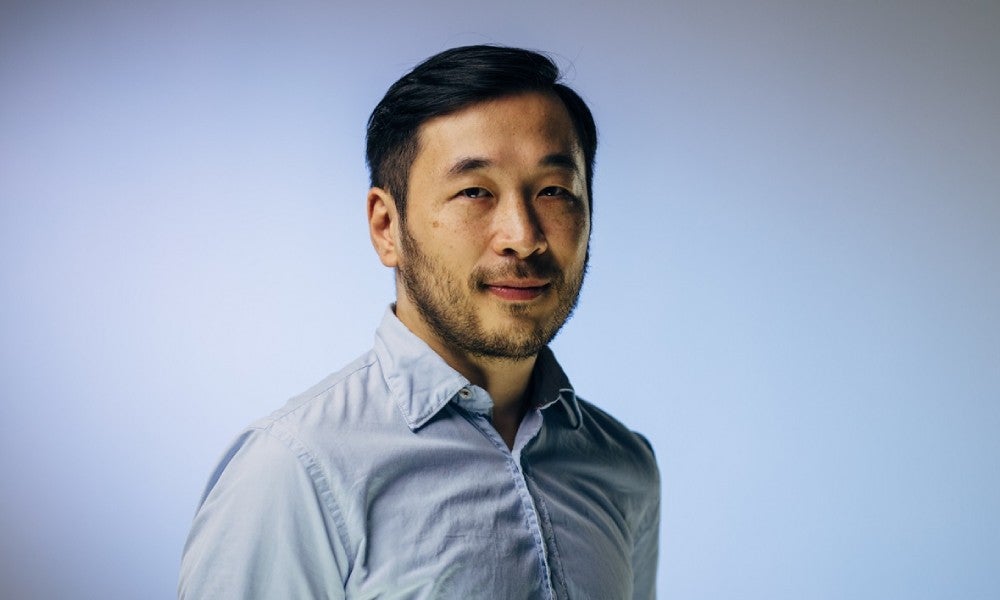
“There is this emerging consensus that going vertical, down a business workflow versus the general horizontal – that is where value is created,” he said. Dr Tang was joined by AI leading experts, UNSW Sydney’s Toby Walsh, Laureate Fellow and Scientia Professor of AI in the School of Computer Science and Engineering, and Stela Solar, Accenture Managing Director for Data and AI, who each shared their key insights.
From general intelligence to “specialist value”
As organisations debate the future of AI, one interesting point is beginning to surface: the most impactful AI tools will be those designed not for everything, but for something – built with precision, guided by prompt engineering, and optimised for real-world results. As businesses rush to integrate AI into every corner of their operations, a crucial question is emerging: should companies build general-purpose AI agents or invest in highly specialised ones?
Unlike jack-of-all-trades AI bots, Ms Solar said specialised AI agents are grounded through context engineering with the relevant data and systems for their niche area of operation, enabling better decisions and more effective problem-solving. In multi-agent systems, AI agent specialisation increases accuracy and mitigates other trade-offs, such as hallucinations, enhancing performance through focused domain collaboration rather than broad capability.
Learn more: How businesses can leverage AI agents (without crossing the line)
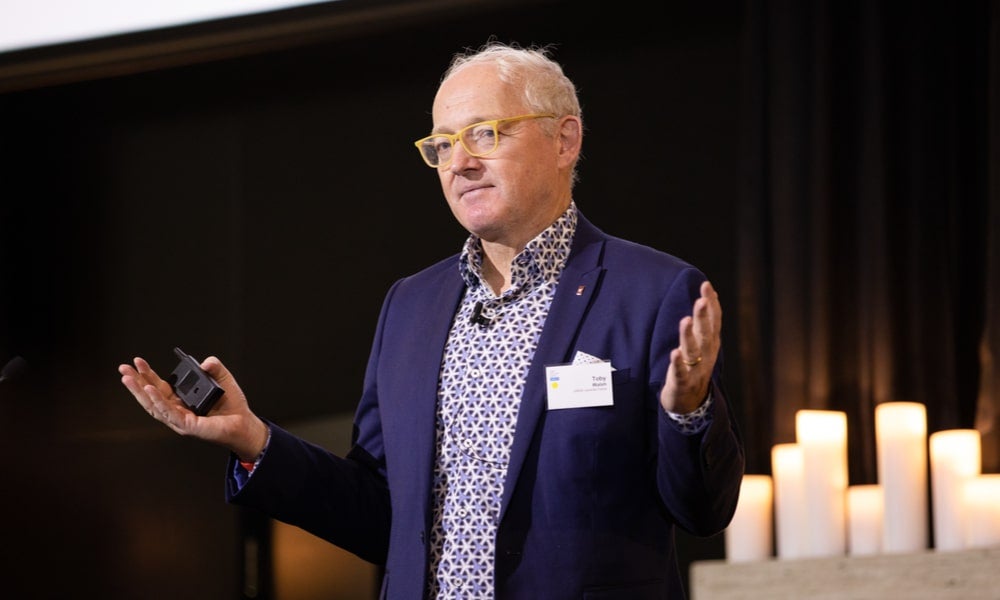
Prof. Walsh, one of the world’s foremost AI researchers, explained how far the technology has come – and how the next frontier will depend on deep specialisation. He said: “The first killer app, the one that caught people’s attention, ChatGPT, was this generalist – it can answer everything from astronomy to zoology, but when you think about it, there isn’t actually much of a use case for that, unless you are a contestant on Who Wants to Be a Millionaire.
“Having a chatbot that can answer everything and anything isn’t actually what you want. You want something that knows the intricacies of contract law or the intricacies of the insurance policies and practices of your firm. That is a highly important specialist.”
So, according to Prof. Walsh, the future lies in getting the agent specialist right. “The business moat is going to be who knows about your customers, who knows about your insurance business. It’s not Microsoft or Google or OpenAI – it’s you,” he said.
This also means that organisations’ “competitive edge” will come from proprietary data, not just algorithms. “You have that data. You will be fine-tuning the models with that data, which you, of course, won’t share with anyone else. Your secret sauce is going to be that. The moat will always be, and always has been with AI, in the data,” said Prof. Walsh.
The rise of specialist AI agents
For Accenture’s Ms Solar, the emergence of AI agents is already transforming enterprise operations – but the biggest gains come from deeply specialised agents rather than general-purpose tools. She said: “When organisations create an AI agent, they get more value when it’s specialised to a particular domain or process, and when those domain roles use it. For example, a legal agent used by a legal team. But even that is not specialised enough for high accuracy.”
One way to get things right is to use an orchestrator agent simplifies it for the user because it’s just one interface point. This approach – combining specialist and orchestrator agents – is increasingly defining how enterprises are structuring their AI ecosystems.
Ms Solar said: “We just did a piece of work in the area of child welfare law. We were building a set of AI agents to help lawyers prepare for court. We tried first just one, a generalist one – it was not accurate. It was hallucinating all over the place, getting parents’ names wrong, ages wrong.
“To actually get accuracy, we had to unpack the problem. We built a team of specialist agents – we call them utility agents – one was really good at court process, another one that was really good at regulation and the acts, and another that was really good at risk assessment and so on.
Subscribe to BusinessThink for the latest research, analysis and insights from UNSW Business School
“When we started building many specialist agents, it got too complex for a user to know which agent to work with, so we added an orchestrator agent that’s really good at knowing which specialist agent to choose.”
So relying solely on large numbers of specialists isn’t practical because you’d end up having to coordinate with far too many of them. “That’s where we start getting to specific kinds of agents: orchestrator, specialist agent, or utility agent – it’s trying to bring the best of accuracy through specialisation, and simplicity through a single orchestration point,” she said.
Why human expertise remains crucial for businesses
Ms Solar shared data-driven evidence of how AI agents are already delivering results. “One of the organisations we did this with actually now solves 52% of their IT support cases just with automated responses from an AI agent,” she said. She also described how AI agents are bridging silos within enterprises: “Now we’re seeing AI agents act as bridges across siloed data, across systems and so on.”
Ms Solar noted this shift is not just about automation but about transformation. “For quite a long time, organisations have wanted to bring together data, have an end-to-end view of the customer journey or the supply chain… and now AI agents are acting as these bridges across the data and systems, to enable the end-to-end view.”
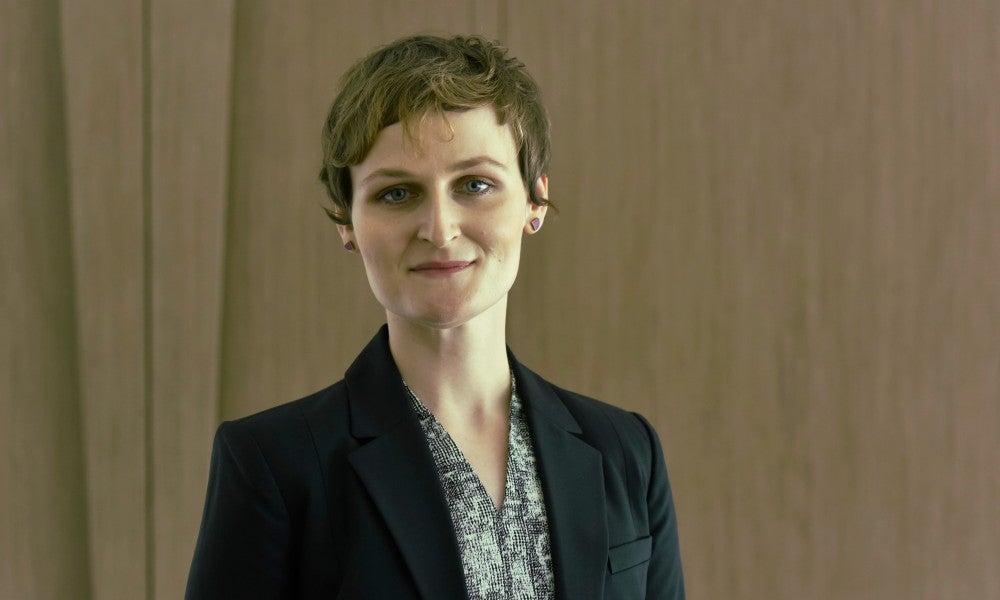
But as powerful as general-purpose systems like OpenAI’s ChatGPT may seem, Ms Solar reinforced that human expertise remains important. “It’s such a fallacy if you ever hear anyone saying that now, with AI agents, we’ll all be generalists. We actually see experts get the most out of systems.
“I love sailing [for example], and just for fun, I asked my generative AI what the rules are for marine navigation. It told me there are red buoys and blue buoys. But there’s no such thing as blue buoys – they’re green. If you don’t know the subject matter, you won’t notice that it’s wrong. You also won’t know the specialist terms to prompt with to get the most out of the system.”
Why businesses must lead with value
Dr Tang also highlighted the importance of aligning AI initiatives with business goals. Ms Solar agreed: “Typically, where we find a good starting point is to look at the technology investment that you already have. It is very likely that it now has an AI agent or generative AI capability within – and that is generally the low-hanging fruit you want to activate.”
Specifically, she outlined five critical pillars for successful AI adoption:
- Lead with value. Ensure that you’re choosing use cases that are actually aligned with the organisation’s objectives.
- Think about your data and digital core – this will enable your AI use cases.
- Be proactive in developing skills and training people.
- Do AI responsibly and with good governance.
- Change management – the ability to continually adapt – is actually key to succeeding with AI, because the challenges are more than just the technology, and the landscape is now shifting so quickly.
Responsible AI is a competitive advantage
Both Prof. Walsh and Ms Solar warned that businesses rushing into AI without governance risk damaging both trust and value. Prof. Walsh said: “It’s not just the cost – it’s actually going to be a business potential. Consumers are going to increasingly realise and value companies that do this in a responsible way.”
Ms Solar agreed: “I wish responsible AI were addressed in parallel with AI use cases. There’s a misconception that responsible AI is just to feel good. It’s actually how to do AI well – to mitigate risk for your company, your stakeholders, and yourself.
“AI is not accountable – the company is. The people who make decisions are. Responsible AI is about doing AI well, and there are very tangible practices to implement.”
The future of work and AI specialists
Finally, Prof. Walsh warned the rise of automation could reshape the workforce: “Many of the things that graduates used to do as entry jobs – those are, unfortunately, precisely the things that generative AI is good at.”
Learn more: How AI is changing work and boosting economic productivity
But he also pointed out that AI amplifies existing expertise (rather than replacing it). “If you’re a skilled programmer, you can use these tools and double your productivity. It may amplify the difference between the people who are good at a job and people who are not so good at a job,” he said.
For businesses, the AI future is not about building a single, omniscient generalist system but about creating networks of specialised, accurate, and well-governed agents that work together to deliver value. “Experts get the most out of systems. The future is getting the specialist right. The more specialised, the narrower the AI agent is, the more accurate it becomes,” said Ms Solar.