

How Australia can navigate the economic cost of bushfires
Australia faces rising economic risks from bushfires, as climate change challenges insurance models, governance coordination, and long-term disaster preparedness
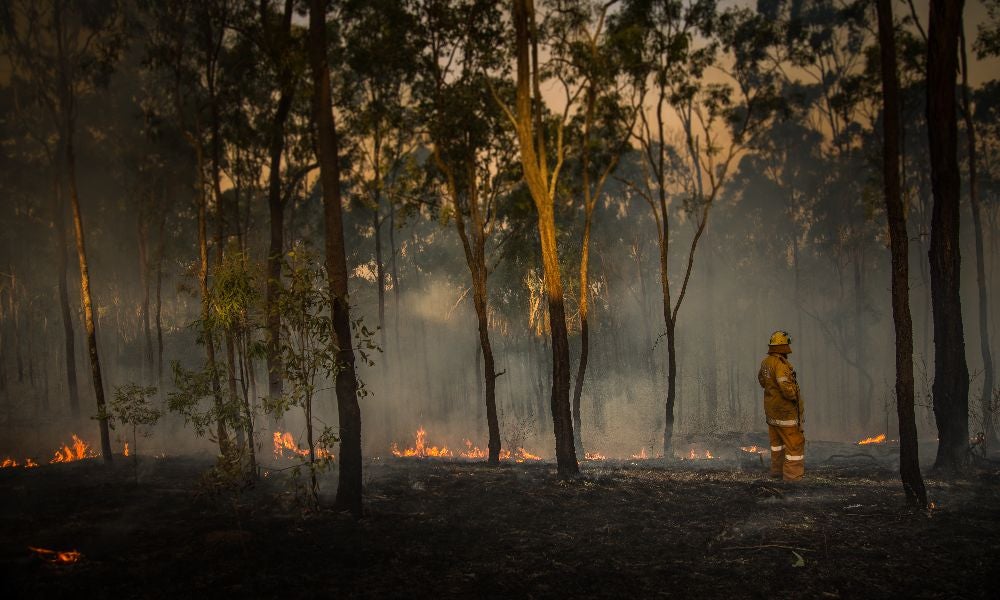
Between June 2019 and March 2020, the Black Summer bushfires burned across Australia, causing loss of life, widespread destruction of forests (many in protected areas), and economic impacts estimated to exceed $100 billion.
This was just one event, and future bushfire seasons are expected to become more frequent and severe, raising the question of what the economic costs of these future events are likely to be.
“The real challenge lies in the complexity and frequency of these events, and the broader escalation of risk… I believe it’s important to acknowledge the unprecedented challenge climate change poses for those managing these situations,” explains Dr Jaco Fourie, a lecturer in the School of Management and Governance at UNSW Business School.

Dr Jaco Fourie’s research, conducted collaboratively as part of a larger multi-researcher project led by Professor Markus Höllerer and an international team of scholars, focuses on the dynamics of coordination during emergency management and recovery.
UNSW BusinessThink recently spoke with Dr Fourie about the key challenges and how we can better prepare for and adapt to future climate-related shocks.
How prepared is Australia for the economic impact of bushfires?
BusinessThink: Your research explores organisational and governance dynamics in climate-driven crises. How effective do you think Australia’s existing institutional structures are at dealing with the economic fallout from repeated bushfire seasons?
Dr Fourie: Australia has highly sophisticated emergency management and recovery arrangements, which were strengthened following the “Black Summer” fires.
When it comes to the financial fallout, the major concern is the long-term viability of the insurance industry. We are already seeing insurers retreat from markets such as Florida and other regions internationally. As major fire seasons become more frequent, providing affordable insurance in vulnerable communities becomes increasingly difficult.
Learn more: How property, power and policy shape Australia’s climate future
Globally, the rising frequency and severity of wildfires, floods, storms, and other climate-related events have led insurers to withdraw from areas like Florida, California, and parts of Canada. This trend foreshadows what some have called an “uninsurable future.” Insurance costs are skyrocketing, and a recent Climate Council report found that across Australia, one in every 25 properties will soon be classified as “high risk,” making these homes effectively uninsurable by 2030.
With this in mind, managing the economic fallout from repeated bushfires (and floods) will become increasingly challenging as the insurance safety net weakens.
Improving Australia’s ability to respond after bushfires
BusinessThink: Recent bushfire seasons have been more frequent, severe, and widespread. From a governance and collaboration perspective, what systemic failures or coordination challenges contribute to escalating economic damages after bushfires?
Dr Fourie: Australia has world-class systems for managing bushfires, with a long history of doing so effectively. That said, more frequent, severe, and widespread fires do create coordination challenges, as highlighted in the 2022 inquiry into disaster preparedness arrangements. One key issue is the need for integrative governance mechanisms that enable coordination across jurisdictions. Our research on the Black Summer fires underscores the complexity of events that span multiple jurisdictions.
Since that inquiry, several reforms have been introduced to improve emergency management coordination, including the establishment of the National Coordination Mechanism and an increased policy focus on climate adaptation at both state and federal levels (e.g., NSW and National Adaptation Plans, the National Climate Risk Assessment).
BusinessThink: Considering your work on collective action and crisis response, what are the main trade-offs or constraints when balancing community safety, economic costs, and long-term resilience in fire-prone regions?
Dr Fourie: There are numerous trade-offs and constraints when it comes to resource allocation, both for fire-resistant infrastructure (prevention) and post-fire recovery.
Themes that have emerged in our work on bushfires include:
- Economic costs vs resilience: Investing in fire-resistant infrastructure and proactive land management reduces long-term losses but requires significant upfront expenditure. Governments at different levels often face pressure to prioritise short-term economic activity (e.g., development) over resilience measures, creating structural tension.
- Long-term resilience vs rapid recovery: Post-fire recovery often prioritises speed – rebuilding homes and restoring economic activity quickly. However, this can lock communities back into high-risk patterns rather than redesigning for resilience (e.g., relocating or changing building codes).
Subscribe to BusinessThink for the latest research, analysis and insights from UNSW Business School
These are intractable tensions, and the increased policy focus on disaster preparedness seeks to balance these competing priorities.
BusinessThink: What role do you see for non-government actors (private sector, community groups, insurers) in reducing the economic cost of bushfires?
Dr Fourie: Non-government actors play a critical role in reducing bushfire-related costs. For example, the private sector helped co-design and develop Australia’s National Disaster Risk Reduction Framework, led by the National Resilience Taskforce within the Department of Home Affairs. That framework recommends that businesses identify financing mechanisms to support disaster risk reduction in infrastructure and development projects. It also encourages enhanced investment in disaster risk reduction and collaboration to improve insurance accessibility and uptake.
Community organisations are vital for preparedness, response, and – crucially – recovery in disaster-affected areas. Our research shows they often lack formal authority and sustained funding to perform this work effectively. Strengthening community capacity and ensuring recovery is community-led remain key priorities.
Insurers arguably have the most significant role to play. The insurance safety net is increasingly challenged by climate-driven risk. Solutions are not immediately clear. Internationally, governments are experimenting with reinsurance schemes, while in Australia, initiatives such as home buyback and relocation programs have begun for flood-affected residents on the mid-North Coast. However, the insurance challenge remains substantial.
Adapting to climate change
BusinessThink: If we treat bushfire seasons as recurring systemic shocks (rather than isolated disasters), what institutional reforms or new collaborative governance arrangements would you recommend to reduce long-term economic and social costs?
Dr Fourie: Governments across Australia are increasingly recognising the systemic nature of disaster risk and the need for adaptation (e.g., the National Risk Assessment as well as adaptation and mitigation plans within each state). There are, however, no simple institutional reforms or arrangements to suggest.
Addressing climate change itself needs to be a priority to reduce the escalating risk and severity of disasters when they strike. A stronger approach is needed to equip communities adequately.
Communities with high social capital, active local groups, and strong relationships with local agencies and authorities tend to fare better in the aftermath of disasters. However, these outcomes are uneven because community capacity varies widely, so creating more capacity would reduce social costs within impacted communities.
Economic costs are harder to address. Events are becoming more devastating, and insurance is becoming more expensive. This remains a significant challenge moving forward.