

How can multinationals genuinely deliver fair work?
Multinationals can move from promises to action by strengthening accountability in fragmented supply chains where exploitative practices persist
Every quarter, multinational enterprises publish glossy sustainability reports that promise fair wages, safe working conditions, and ethical supply chains. Yet scratch beneath the surface and a different picture emerges. Workers in garment factories earn poverty wages. Migrant labourers face exploitation. People with disabilities struggle to find employment at all.
The world of multinationals is full of examples. The Rana Plaza collapse, for example, was the deadliest garment factory disaster in history. In April 2013, a building in Bangladesh collapsed, killing more than 1100 garment workers and injuring another 2500. The eight-storey factory produced clothing for Walmart, Benetton and Primark. Despite cracks appearing in the building the day before, workers were ordered back to their stations.
And in 2019, human rights firm International Rights Advocates filed a lawsuit against Apple, Alphabet (Google), Dell, Microsoft and Tesla, accusing the technology giants of complicity in the death and serious injury of children working in cobalt mines in their supply chains. Another case involves eight former child slaves from Mali, who filed a class-action lawsuit against chocolate giants including Nestlé, Mars and Hershey in 2021, alleging the companies knowingly profited from child labour on Ivory Coast-based cocoa farms, where an estimated 1.56 million children harvested cocoa.
Clearly, the gap between corporate promises and workplace reality represents one of the most pressing challenges in multinationals in their supply chains. Despite wielding enormous power to shape labour conditions across borders, many multinationals continue to reproduce exploitative practices through outsourcing and fragmented supply chains. The question is no longer whether companies should do better, but how they can translate well-meaning rhetoric into concrete action.
This challenge formed the focus of recently published research, which examines the structural barriers that marginalised groups face in accessing decent work and proposes actionable strategies companies can adopt. Co-authored by Dr Christiaan Röell, a lecturer in the School of Management and Governance at UNSW Business School, Assistant Professor Anna Ocampo from ESADE Business School in Spain, and Professor Mustafa Özbilgin from Brunel University of London, the research drew on evidence from multiple studies examining different marginalised segments of the workforce.
Published in AIB Insights, the research paper, From Pipe Dream to Meaningful Action: How MNEs Can Deliver Decent Work, synthesised findings across these groups to identify common patterns and develop practical frameworks for business leaders.

“We’ve long been interested in how multinationals can move beyond polished statements about “decent work” – whether symbolic or genuinely well-meaning – to concrete actions that actually improve the lives of marginalised workers in their global supply chains,” said Dr Röell. “That curiosity led us to systematically review research on marginalised groups, and to develop a practical framework that managers can use to reassess and strengthen their accountability across complex supply chains.”
Dr Röell said that one of the surprises in the findings was how similar structural barriers look across very different regions and groups, and how many risks are effectively “outsourced” and hidden in lower tiers of supply chains, even when companies have strong stated commitments. “We were also struck by how many tools already exist – from digital traceability to international standards and inclusive HR practices – but are used in a fragmented way, which is why we pulled them together into a single, actionable roadmap for multinational enterprises that genuinely want to deliver decent work,” said Dr Röell.
Understanding the scale of the problem
The concept of decent work goes far beyond simply paying wages. It encompasses productive employment that provides fair income, safe conditions, equitable treatment, adequate rest, healthcare and compensation. Workers should be free from abuse, harassment and discrimination based on their age, gender, ethnicity or social status.
Yet almost a quarter of the world's population falls into the category of working poor, defined as people whose incomes fall below poverty lines, despite being employed. These workers are concentrated in regions such as Sub-Saharan Africa, South Asia and parts of Southeast Asia, where informal employment dominates, and social protections remain limited. Women are overrepresented in this group, typically earning their livelihoods as garment labourers, domestic workers, and street vendors.
Learn more: Subcontracting and sweatshops: The wake-up call businesses need?
Migrant workers face particularly acute challenges. Despite moving from low-income to high-income countries in search of better opportunities, their competencies are often misrecognised. They are disproportionately engaged in unregulated jobs with high occupational injuries, xenophobia, mistreatment and abusive supervision. Women migrants receive fewer job opportunities than any migrant group due to labour market segregation concentrated in low-skilled occupations.
For LGBTIQ+ workers, legal protection against discrimination exists in only 71 countries globally. Evidence shows that these workers are increasingly marginalised, misrecognised and silenced, hindering their career progression and access to social benefits. People with disabilities face similar barriers. In the United States alone, 18 million working-age people with disabilities exist, but only 33 per cent are employed.
The supply chain accountability gap
The research highlighted a fundamental problem in how multinationals organise their operations. Increasing global competition leads to what the researchers term the "hollowing out" of working conditions in global supply chains. Employers shift risks and responsibilities onto workers through subcontracting, casualisation, and zero-hours contracts, thereby increasing job precarity.
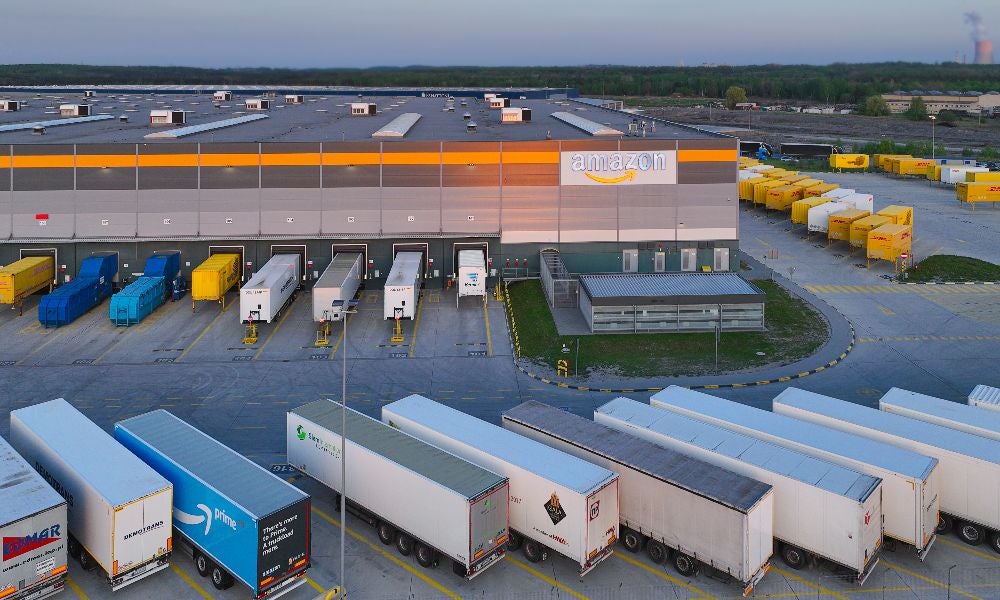
Large fashion retailers face persistent criticism from the US Congress regarding their labour practices in foreign countries. American-based multinationals, such as Walmart and Amazon, received criticism for unsafe working conditions, low wages, and inadequate healthcare. The pattern is clear: companies that outsource their value chains tend to outsource their responsibilities, creating uneven access to decent work.
“One of the clearest lessons from our research is that there’s a persistent ‘supply chain accountability gap’. Multinationals often have strong policies at the top, but much less visibility and control further down their chains, where the most vulnerable workers are,” said Dr Röell.
“Too many risks are effectively outsourced to contractors and sub-suppliers, which allows poor conditions to remain hidden while brands still claim success on ‘decent work’. Closing this gap means treating accountability as end-to-end, not stop-and-start: mapping who is actually doing the work, listening to marginalised groups themselves, and tying commercial decisions to whether conditions on the ground are genuinely improving.”
Making transparency work
The researchers proposed several concrete strategies for strengthening accountability across global value chains. First, the company headquarters should mandate foreign subsidiaries and suppliers to adopt working policies that actively monitor work processes and compensation schemes. Unilever, for example, committed to providing a living wage for all employees, including those employed by suppliers, by 2030.
Second, multinationals should utilise technology to enhance transparency and minimise human rights violations. The concept of "smart disclosure" involved sharing information through digital technologies to enhance data access and connectivity. This approach reinforces accountability and bolsters monitoring of responsibilities in global supply chains. When supplier operations remain opaque, companies face significant challenges in identifying and addressing human rights risks.
Subscribe to BusinessThink for the latest research, analysis and insights from UNSW Business School
Third, companies should adopt internationally recognised management system standards such as ISO 9001, ISO 14001 and ISO 45001. These standards provide certifiable frameworks for continuous improvement through internal audits and corrective action. They establish a common language and benchmarks that transcend national legal variations, helping firms to define, measure and monitor practices across their global value chains.
Dr Röell explained that transparency is only powerful when it reaches the parts of the supply chain where harm actually occurs. “It’s not enough to publish glossy reports at headquarters if supplier operations remain a black box. The real test of transparency is whether a company can show, in detail, who is doing the work, under what conditions, and how those conditions are improving over time,” he said.
Building inclusive workforces
Beyond supply chain accountability, the research emphasised the importance of building inclusive talent pipelines. This requires investments in attracting and retaining diverse talent pools, particularly workers from marginalised backgrounds.
Recent research from Western multinationals in Indonesia showed how managers became covert allies for LGBTIQ+ employees in contexts where public support was not feasible. This approach provides a viable route to fostering inclusive cultures within diverse workforces, though it has limitations in producing visible structural change.
For migrant workers, companies should implement wider policies that offer opportunities for upward mobility, skills development, and integration into formal labour markets. Although multinationals often provide better working conditions than local employers, migrant workers in these companies are more likely to leave their employers, potentially due to ongoing threats to their legal rights.
“Creating an inclusive workforce isn’t just about hiring from diverse groups, it’s about building pathways so that marginalised workers can actually progress and feel safe,” according to Dr Röell, who said the research shows that managers in multinationals can act as quiet, ‘covert allies’ for LGBTIQ+ staff in environments where public support is risky, and that inclusive policies for migrant workers need to go beyond basic protection to real opportunities for skills, mobility and voice.
“The bigger challenge is turning these pockets of good practice into visible, structural change so that inclusion is not dependent on a few committed individuals but embedded in how the organisation works everywhere,” he said.
Practical steps forward
The researchers developed a comprehensive framework outlining specific questions managers should ask and recommended actions they should take. Accountability across global value chains includes requiring all suppliers to sign decent work codes of conduct, publishing annual supplier compliance reports, and conducting regular independent third-party audits.
For building inclusive talent pipelines, recommended actions include setting diversity hiring goals, building partnerships with inclusion-focused organisations, offering multilingual training and support sessions for migrant workers, and conducting regular accessibility audits for people with disabilities.
The research made clear that decent work should not be seen as a luxury or corporate social responsibility afterthought. "It is a business and moral imperative," wrote the researchers, who noted that, beyond compliance-driven approaches, companies needed to embrace proactive strategies, from inclusive recruitment and fair compensation to digital monitoring and support for marginalised workers.
“At the end of the day, the message to multinationals and their partners is simple: decent work cannot be outsourced,” said Dr Röell. “Brands, suppliers, investors and regulators all share responsibility for how workers are treated in global value chains.”
This means setting clear, time-bound goals for living wages and safe working conditions, demanding full transparency from first-tier suppliers downwards, and providing marginalised workers with real channels for voice and redress. “If companies are serious about ‘leaving no one behind’, they need to hardwire accountability for decent work into sourcing decisions, executive incentives and stakeholder engagement, not just into their sustainability reports,” he said.
7 recommendations for industry professionals
- Procurement leaders should map suppliers beyond the first tier and include worker conditions in sourcing decisions.
- Sustainability and risk leaders should connect public reporting with evidence of conditions at supplier sites.
- HR leaders should build progression pathways, skills development and support for marginalised workers.
- Compliance leaders should use audits alongside worker voice, independent organisations and direct monitoring.
- Executive teams should set goals for wages, safety, transparency and redress, then review progress over time.
- Boards and investors should ask whether supplier policies influence commercial decisions and executive incentives.
- Supply chain managers should review whether supplier codes of conduct reach contractors and sub-suppliers.