

The complexity advantage: How to lead when certainty disappears
Complexity can't be eliminated, but it can be navigated. Three experts explain how today's leaders can make better decisions in navigating uncertainty
Leaders are increasingly expected to make decisions in environments where the variables don’t stand still. Markets shift, stakeholder expectations evolve, regulations change, and today’s solution can quickly create tomorrow’s challenge.
It’s when a problem moves beyond being merely complicated and becomes genuinely complex that leadership is most tested.
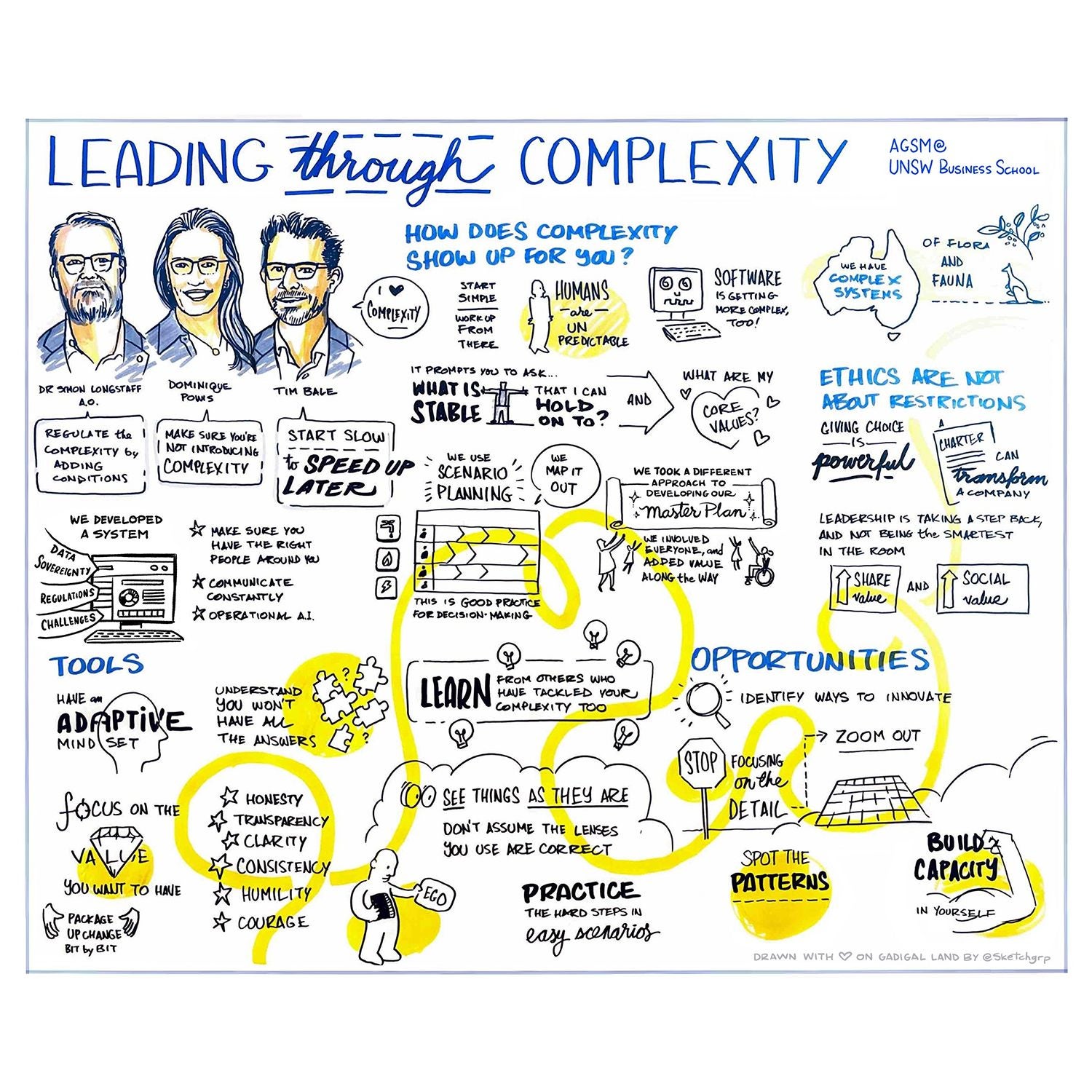
According to Dr Simon Longstaff AO, Executive Director of The Ethics Centre and an Adjunct Professor at AGSM @ UNSW Business School, complexity is defined by both the number of variables in flux and the speed at which they change. Complex problems require judgment as much as knowledge, because the best way forward is rarely obvious.
“Typically, when people find themselves stuck in complexity, the choice is not between, for example, good and bad or right and wrong, because those choices are pretty easy,” Dr Longstaff said recently during a panel discussion on leading through complexity at the AGSM 2026 Professional Forum. “It’s when it’s good versus good, when it’s right versus right, or sometimes when the best option is not a good one at all; it’s just the least bad.”
Photo gallery: the 2026 AGSM Professional Forum
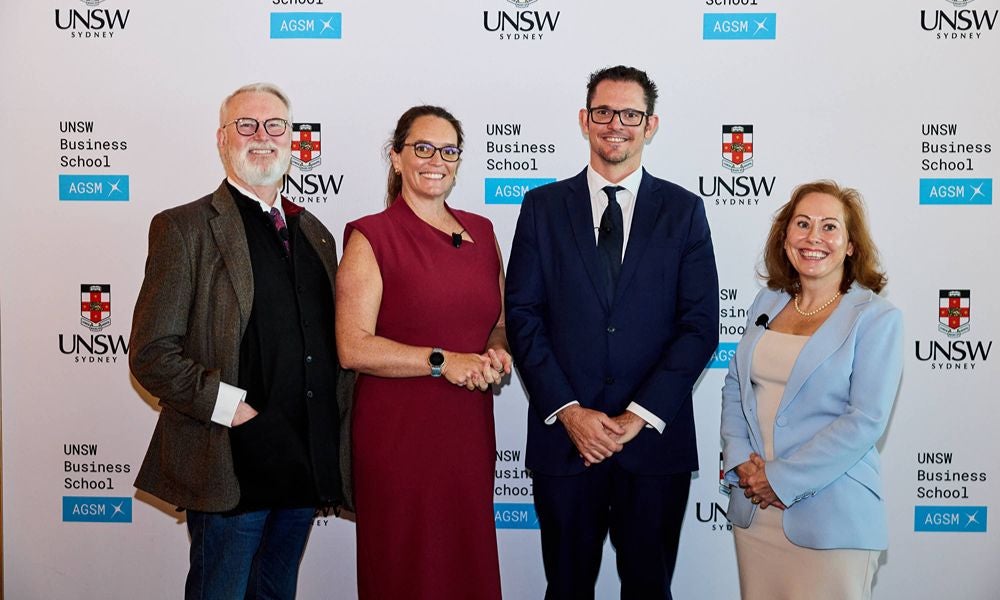
Rather than trying to eliminate or “solve” complexity, Dr Longstaff – along with co-panellists Dominique Powis (MBT 2009), Chief Technology Officer at InfoMedix, and Tim Bale (AGSM MBAE, 2023), Director of Asset Development & Delivery at the Bradfield Development Authority – argued that learning how to work with it is key.
Not every leader is, like Ms Powis, overseeing the global rollout of health technology or, like Mr Bale, helping build Australia’s first new city in a century. But organisations of all sizes face complex challenges where, the panellists agreed, the skills needed to navigate them – and uncover the opportunities complexity creates – are universal.
More than moving parts
Delivering Bradfield City, a 114-hectare city centre adjacent to the new Western Sydney International Airport and Australia's first new city in more than 100 years, is an exercise in complexity. As a leader responsible for shaping a new economic and civic centre, Mr Bale must navigate the interconnected challenges of infrastructure, utilities, transport, housing, investment attraction and public realm delivery. Decisions in one part of the city have implications across many others, while government priorities, market conditions and stakeholder expectations continue to evolve.
For him, a complex problem, unlike a merely complicated one that can be solved with enough expertise and analysis, is “almost living”.
“It’s a systems dynamic, and everything changes – you have reinforcing loops, negative loops; you turn one on, and it doesn’t necessarily mean the other one turns off,” Mr Bale said. He views it as similar to the natural complexity of Australia’s sensitive ecosystem, where small changes can have far-reaching effects on native flora and fauna.
Learn more: How to read the economy when disruption becomes the norm
“I think that is the best way to define complexity. You may not know what’s coming, and that might be OK,” he said. “However, you can start to pull it apart, understand how each part interconnects, and understand each variable and those moving parts. By doing so, you can build and implement a resilient strategy that can adapt to changing circumstances while remaining focused on the desired outcome.”
The same interconnectedness shapes the healthcare systems within which InfoMedix develops medical software used in hospitals across Australia, where Ms Powis explained a systems failure can immediately affect thousands of patients. Layered onto that are clinicians, patients, hospital workflows, regulation, data governance and the unpredictability of human behaviour – all influencing one another in real time.
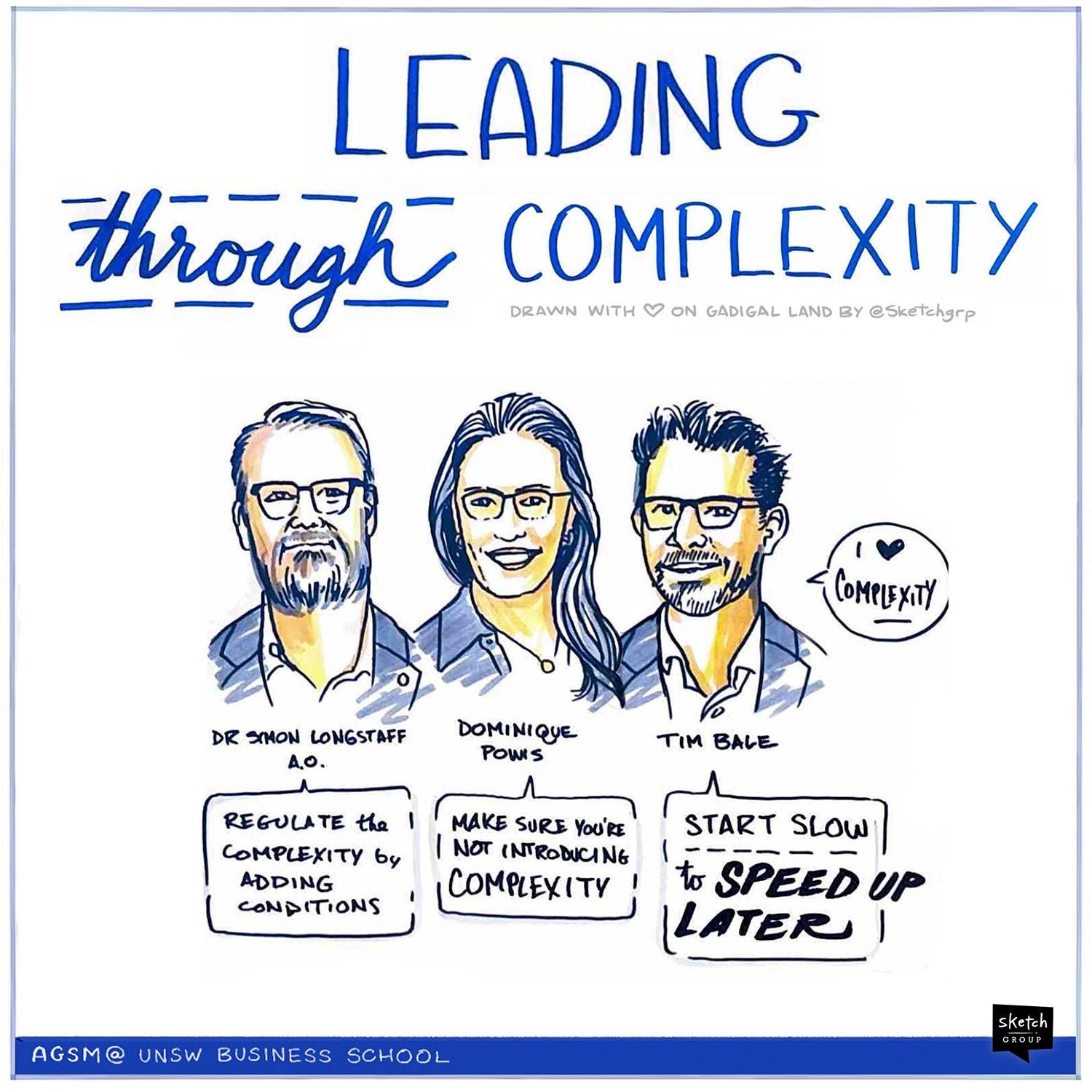
She sees an important distinction between “natural complexity” and “unnecessary complexity” that people themselves introduce. In a medical software setting, avoiding introducing complexity is central and requires time investment and “constant communication” with stakeholders and end users. “We have to separate true complexity from complexity for complexity’s sake,” she said.
Recognising that distinction also presents an opportunity. Ms Powis argued that years of technological development have layered unnecessary complexity onto many systems, giving organisations the chance to rethink how products, processes and services are designed. "I think there is an opportunity to identify ways to innovate and do things better and more humanistically to better set us up for success in the future," she said.
For Dr Longstaff, these examples point to a common characteristic. Complexity isn’t defined by scale or technical difficulty, but by interdependence. It’s the moment when choices ripple through a system in ways that can’t be neatly isolated or predicted. “When there’s this interdependency, that makes it complex,” he said.
Recognising complexity, however, is only the beginning. The harder question is how leaders continue making sound decisions amid constant change.
Finding the ‘still point’
If complexity is defined by constant change, the panellists argued that effective leadership begins by identifying what shouldn't change. Dr Longstaff said the need to manage interdependencies in complexity invites a key question: “Where does the still point lie?"
"You have to have some position, stable framework or platform on which to address this,” he said. “If the ground is completely shifting under you while you’re doing all these things, then failure is much more likely.”
A still point can be as basic as a clear understanding of an organisation's defining purpose, supported by the values and principles that guide good judgement. "When you've got those, then I think the complex becomes manageable," he said. "The interdependencies become something that you can actually put into a framework and proceed from there."
Values and principles become especially important when leaders face ethical complexity. Rather than viewing ethics as something reserved for extraordinary dilemmas, Dr Longstaff argued it provides a practical framework for understanding human choice – and for navigating situations where competing priorities make the "right" path unclear.
Storyboard: the 2026 AGSM Professional Forum
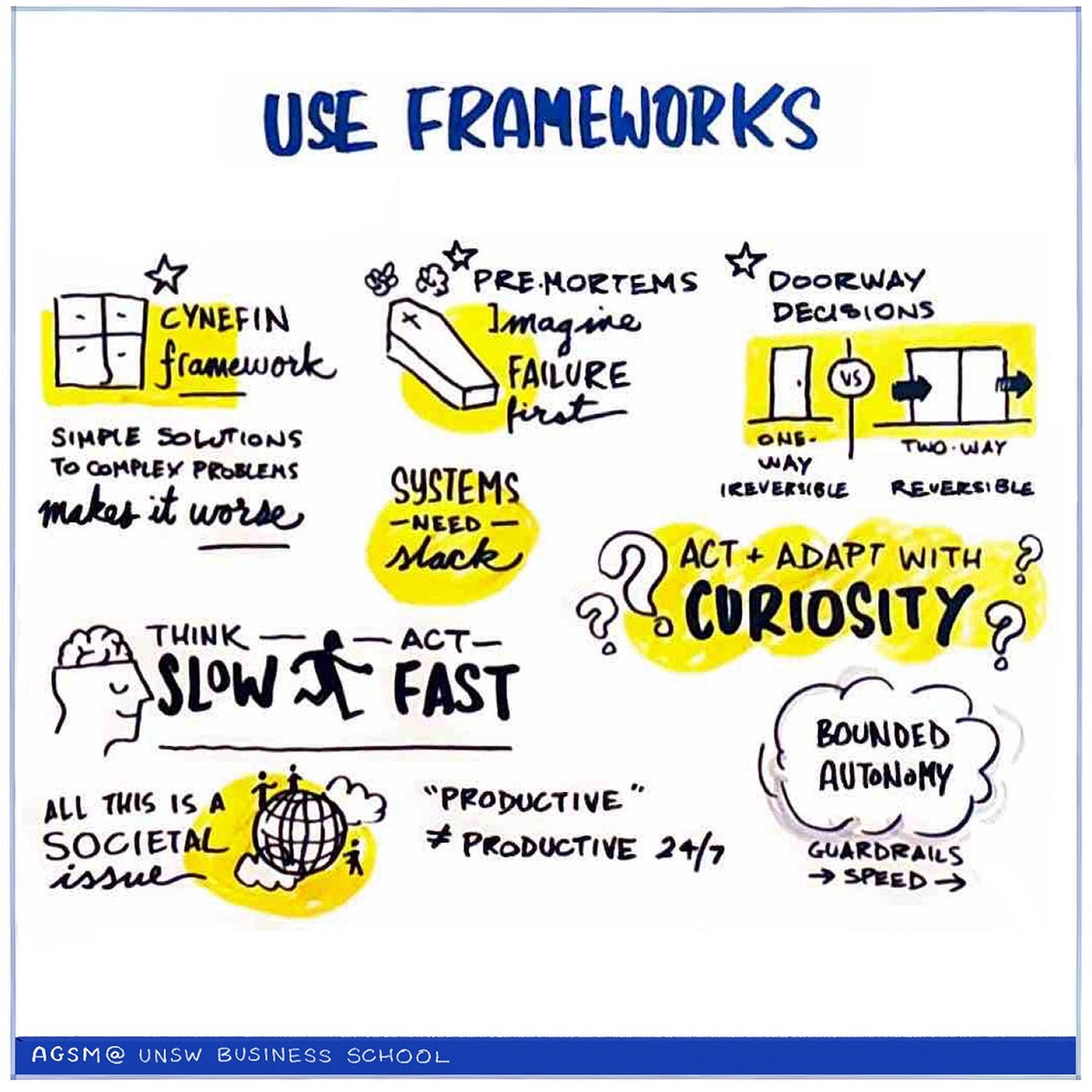
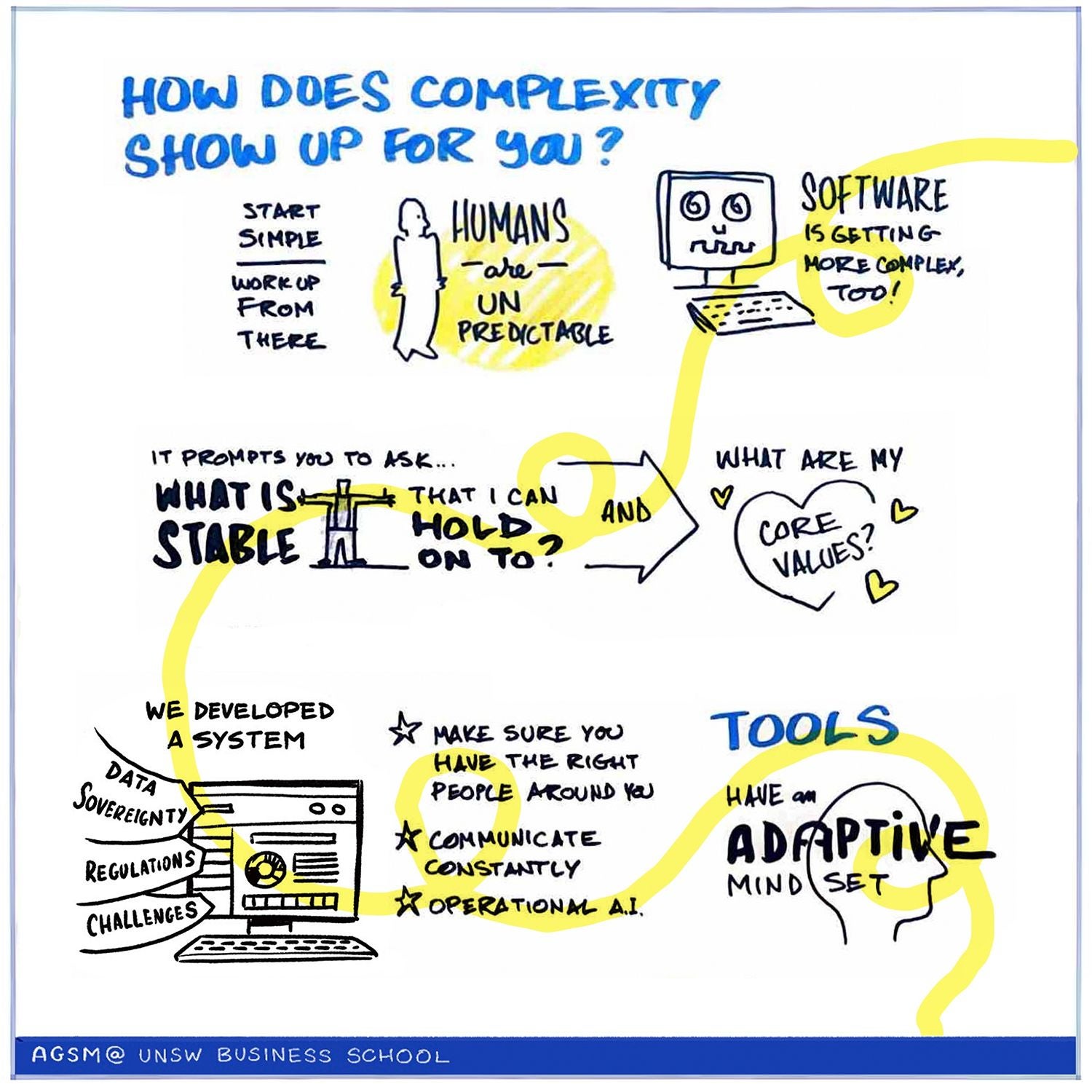
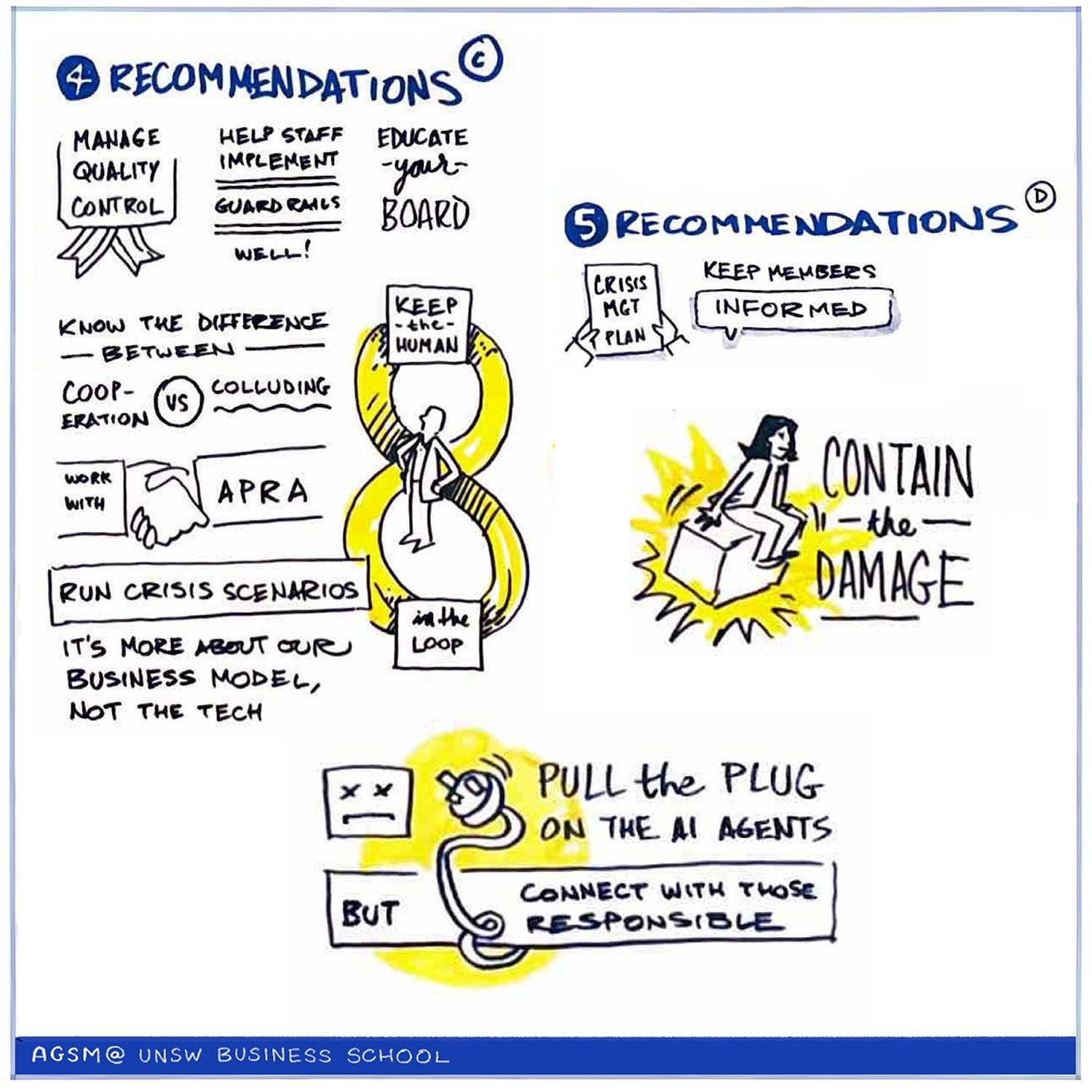
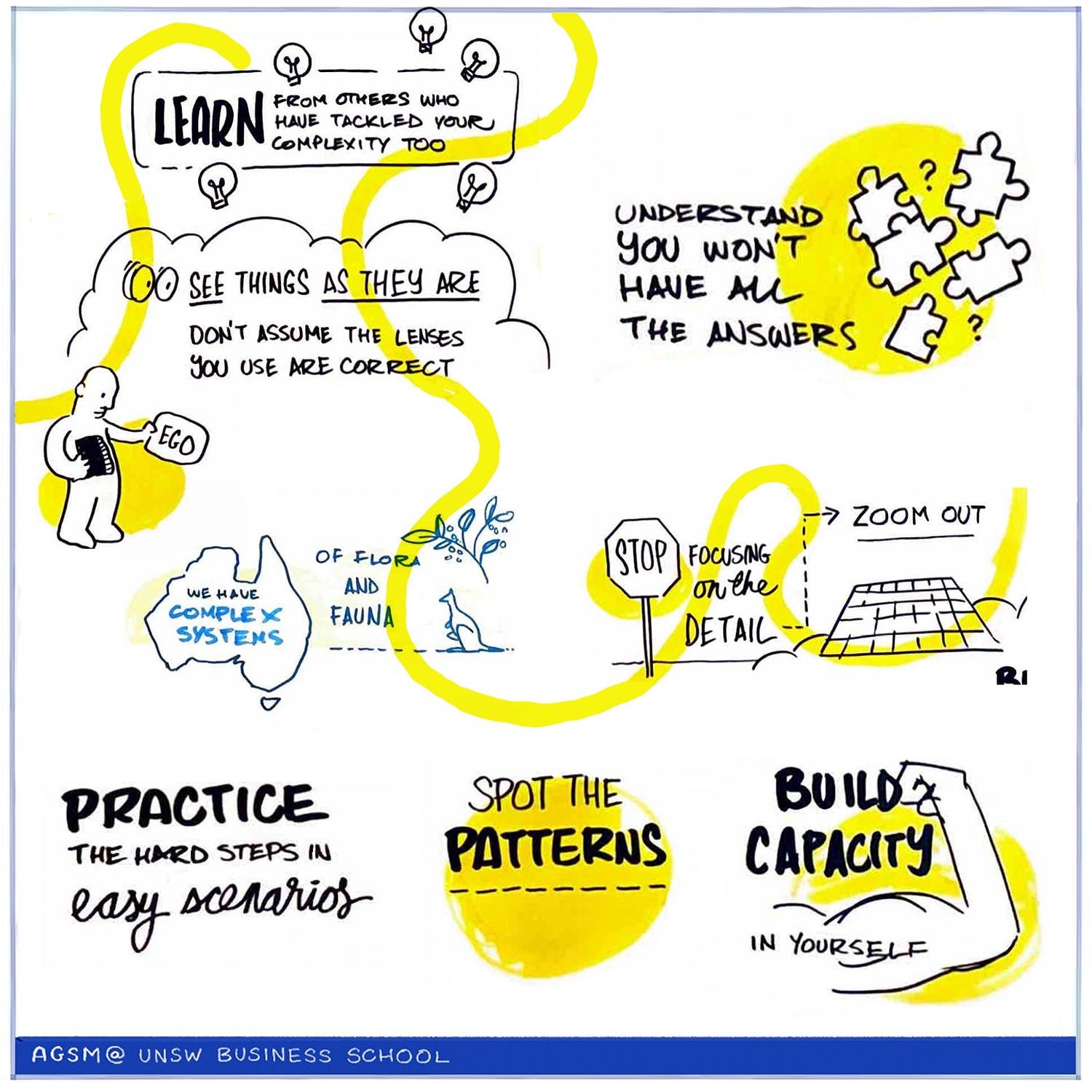
“It’s something that we can understand, and with that understanding, we can take what seems to be overwhelmingly complex and put it into a manageable form,” he said.
The same thinking is reflected in Mr Bale’s approach to the Bradfield City project. Before construction accelerates, he said, the team deliberately slows down in the planning stage to establish a clear strategy and test possible futures through scenario planning, giving them a framework that can adapt as conditions inevitably change.
"We start slow, we plan, so that once we've built that foundation, we can move decisively, adapt quickly and execute at scale,” he said.
Leading without all the answers
Having a framework, however, doesn't remove uncertainty. If anything, the panellists argued, complexity demands a different kind of confidence from leaders – one rooted not in having all the answers, but in recognising the limits of what they know.
For Ms Powis, as with Mr Bale, the framework begins with starting slowly, but she also highlighted the need to recognise one’s own limitations. “It’s about stopping, recognising that you might not know all the answers straightaway, and making sure you’ve got the right people around you and that you understand your role in not solving but organising the complexity around you,” she said.
Subscribe for the latest research, analysis and insights from UNSW Business School
It often means resisting the instinct to control every variable. Rather than expecting certainty, leaders should break complex problems into manageable parts, look for patterns, and remain willing to adapt as new information emerges.
“One of the things engineers are good at is breaking things down into patterns, even though something might be unpredictable or you might not be certain as to where it’s going,” said Ms Powis, who likened leading through complexity to “elephant carpaccio” and the necessity of “taking one bite at a time”. She explained: “It’s trying not to control the situation but to move with it, experiment early and adapt."
Equally important is communicating openly about what is known – and what isn't. “It’s constantly communicating almost to the tactical level, as opposed to the strategic level, about: this is what we’re doing today to find out more information or understand what skills we need, or to understand how we need to adapt and how the business needs to evolve,” Ms Powis said.
Dr Longstaff described this as one of leadership's most underrated qualities: humility. "Too often, you see executives who cannot say, 'I don't know', and who plough on in a state of ignorance to a very bad place," he said, adding that the “notion of seeing things as they are” is a “crucial skill for dealing with complexity” that should be better cultivated in leaders.
“What we tend to do is become better and better at viewing the world through a very limited set of lenses which are defined by our profession, by the disciplines that we adopt from an early age and later,” Dr Longstaff said. “And so we miss things.”
Instead, he argued, acknowledging uncertainty creates space for better judgment, stronger collaboration and clearer decision-making.
Mr Bale sees curiosity as the practical expression of that humility. Rather than assuming leaders should have all the answers, he encourages them to ask questions, challenge assumptions, and rely on the knowledge of those around them. "Seeing is also about just being curious – curious in asking questions and removing the ego that you are meant to know everything," he said. "No one knows everything, and you've got to lean on people around you and keep asking questions."
Preparing for complexity
If leaders can't predict exactly what lies ahead, how do they prepare for it?
For Mr Bale, one of the most effective tools is scenario planning. Rather than attempting to forecast a single future, his team maps out a range of possibilities – from changes in interest rates and infrastructure timelines to stakeholder expectations – and considers how each might affect the project.
“Map things out and understand how different futures could unfold,” he said. “Then build enough capacity and flexibility into the organisation that when change comes, you're ready to embrace it rather than react to it.”
Dr Longstaff argued that this kind of preparation does more than improve planning – it improves judgement, helping to “prevent yourself from being overwhelmed by the complexity of a moment”. Comparing complexity to learning to drive on an icy road, where the instinct is often to brake when gentle acceleration is needed, he noted that counterintuitive decisions cannot be learned in the middle of a crisis.
"You don't want to learn to do that as you're heading towards the edge of the cliff," he said.
Learn more: Avoiding the leadership mistake that turns complexity into crisis
Instead, practising different scenarios helps leaders refine their intuition, recognise patterns more quickly and process information with greater confidence when complex situations emerge. “Pattern recognition, another part of seeing, means you will recognise certain familiar things that have occurred either in a scenario or another experience, which equip you then to deal with the complexity,” Dr Longstaff said.
“You don’t have to have everybody in the room to do this – even if there’s just one person who can synthesise those two things and reframe the environment back to others, then things settle down, and you have a better capacity to deal with complexity.”
Ms Powis described a similar approach in software development, where breaking large, unpredictable challenges into smaller components helps teams make progress without becoming overwhelmed. “It’s about the pattern recognition; it is about taking some time to really absorb yourself in what you’re trying to achieve, the value that you’re trying to bring, the order in which that value should be realised, and then having a look at, essentially, boxes on a page, and how you can compartmentalise some of the ways that you are going to approach this,” she said.
“Then, for each box on the page – the milestones, the purpose, the rollout plan, the costings – it’s bit by bit making sure that you’ve got the right people around you involved, and also your partners and stakeholders.”
Complexity as a capability
Frameworks, curiosity, humility, communication and scenario planning might appear to be very different ideas. But together, the panellists suggested they all serve the same purpose: helping leaders exercise good judgement when certainty is impossible.
As Dr Michele Roberts, Academic Director of AGSM and Associate Dean (Post Experience) at UNSW Business School, who moderated the panel discussion, observed, complexity is often used as an excuse for inaction. Yet leaders who establish clear principles, prepare thoughtfully, remain curious and acknowledge what they don't know are better equipped to act.
For Mr Bale, one of the most important lessons is that complexity is rarely navigated alone. At Bradfield City, he said that one of the most valuable lessons has been to involve stakeholders from the outset. Rather than producing a finished master plan and seeking feedback, the Bradfield Development Authority worked alongside transport bodies, utilities, local councils and the community as the plan evolved.
"You get better outcomes when you involve people early," he said. "Different perspectives help identify risks, uncover opportunities and strengthen decisions as the project evolves."
Underlying all of these approaches, Dr Longstaff argued, is the importance of keeping decision-making as simple as possible. Rather than responding to complexity with ever more rules, processes and compliance requirements, leaders should return to the principles that form their "still point".
"You have a principle, and it sounds so simple and obvious, but it's incredibly powerful when it's put in even the most challenging, complex environment,” Dr Longstaff said. “It's something you can take forward and apply in new ways, which far better respond to complexity and produce really excellent outcomes."
For Ms Powis, that ultimately comes back to accepting that complexity itself isn't the enemy. "Find your boxes on a page," she said. "Try to simplify as best you can, but be comfortable with complexity, knowing that if you're adaptable, and if you've scenario-planned accordingly, it's going to be okay."